Recruitment & Hiring in 2026
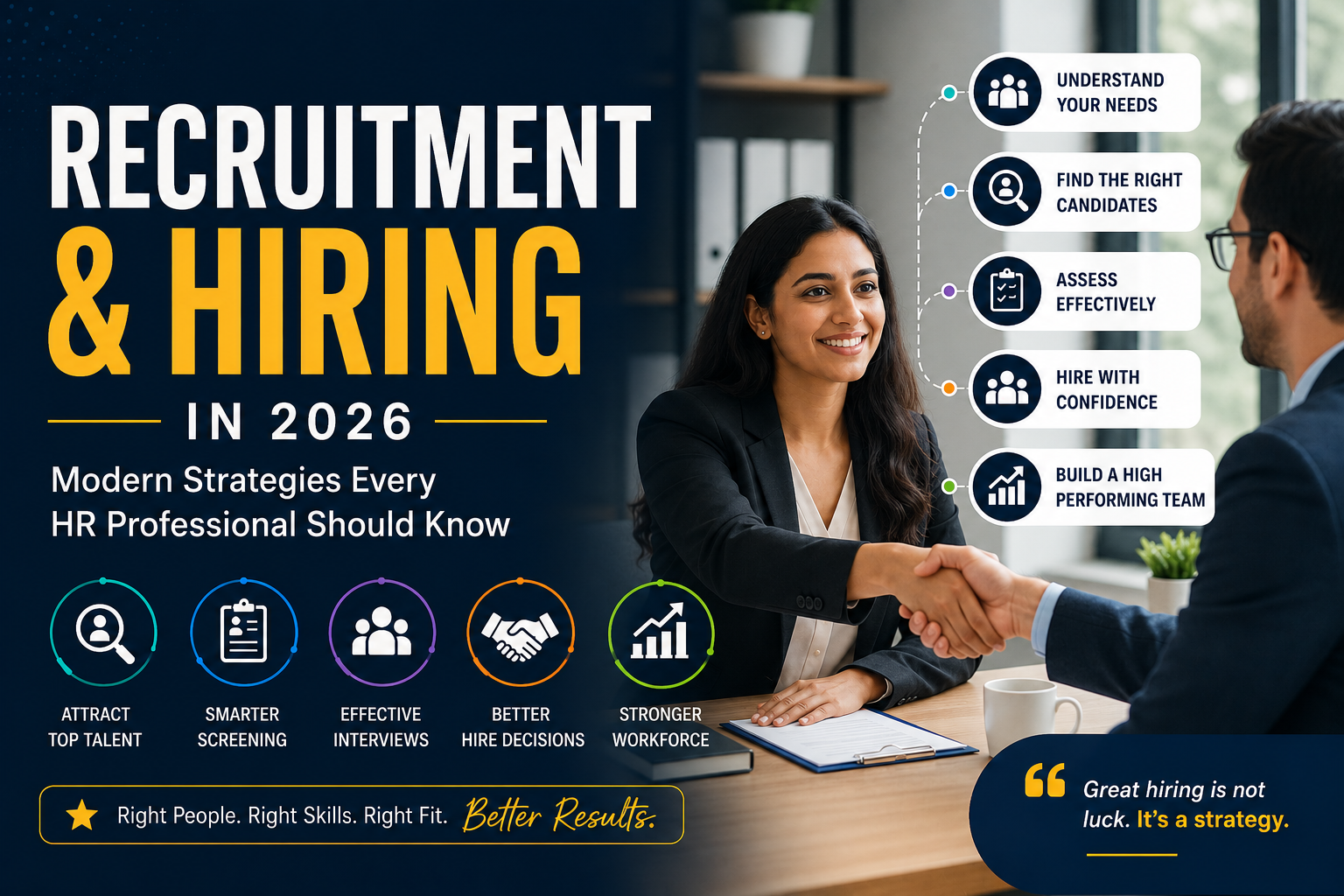
Recruitment & Hiring in 2026: Modern Strategies Every HR Professional Should Know
Introduction
Recruitment has evolved far beyond posting job openings and collecting resumes. In today's competitive job market, organizations must attract, assess, and retain the right talent while providing an excellent candidate experience. HR professionals play a strategic role in building high-performing teams that drive business success.
This guide explores modern recruitment and hiring strategies, common challenges, and best practices that can help HR professionals improve hiring quality and reduce recruitment costs.
Why Recruitment Matters More Than Ever
Hiring the right employee is one of the most important business decisions an organization makes. A strong recruitment process helps organizations:
- Reduce employee turnover
- Improve productivity and team performance
- Build a positive employer brand
- Save recruitment and training costs
- Increase employee engagement and retention
- Support long-term business growth
A poor hiring decision, on the other hand, can lead to lost productivity, increased costs, and lower team morale.
The Modern Recruitment Process
A successful recruitment process typically includes the following stages:
1. Workforce Planning
Before hiring begins, HR should identify:
- Current workforce gaps
- Future hiring requirements
- Required skills
- Budget and timelines
Proper planning prevents unnecessary hiring and improves resource allocation.
2. Creating Clear Job Descriptions
An effective job description should include:
- Job title
- Key responsibilities
- Required qualifications
- Technical and soft skills
- Experience requirements
- Salary range (where appropriate)
- Work location
- Growth opportunities
Clear job descriptions attract more qualified candidates and reduce irrelevant applications.
3. Sourcing the Right Talent
Modern recruiters use multiple sourcing channels, including:
- Company career pages
- Job portals
- Employee referrals
- Campus recruitment
- Recruitment agencies
- Social media
- Talent communities
Using multiple channels increases access to high-quality candidates.
4. Resume Screening
Manual resume screening is time-consuming. Many HR teams now use AI-powered Applicant Tracking Systems (ATS) to:
- Parse resumes automatically
- Match candidate skills
- Rank applicants
- Remove duplicate profiles
- Identify suitable candidates quickly
Automation allows recruiters to spend more time engaging with candidates rather than reviewing paperwork.
5. Candidate Assessment
Assess candidates using a combination of:
- Technical tests
- Aptitude assessments
- Behavioral interviews
- Situational questions
- Practical assignments
- Cultural fit evaluations
A structured assessment process reduces hiring bias and improves decision-making.
6. Interview Process
Best practices include:
- Standardized interview questions
- Competency-based interviewing
- Panel interviews when appropriate
- Consistent evaluation criteria
- Timely communication with candidates
Remember, interviews evaluate not only candidates but also how candidates perceive your organization.
7. Background Verification
Before extending an offer, verify:
- Employment history
- Educational qualifications
- Professional certifications
- Identity documents
- References
This step helps reduce hiring risks and ensures compliance.
8. Job Offer and Onboarding
Recruitment does not end when a candidate accepts an offer.
A structured onboarding program helps new employees:
- Understand company culture
- Become productive faster
- Build relationships
- Improve long-term retention
A positive onboarding experience can significantly reduce early attrition.
Common Recruitment Challenges
HR professionals often face several hiring challenges:
- Talent shortages
- High competition for skilled professionals
- Long hiring cycles
- Candidate drop-offs
- Salary expectations
- Skill mismatches
- Unconscious hiring bias
- Remote hiring complexities
Addressing these challenges requires continuous process improvement and data-driven decision-making.
Technology is Transforming Recruitment
Modern HR teams increasingly rely on technology to improve efficiency.
Popular recruitment technologies include:
- Applicant Tracking Systems (ATS)
- AI resume screening
- Recruitment CRM platforms
- Video interviewing software
- HR analytics dashboards
- Automated interview scheduling
- Skills assessment platforms
- Digital onboarding systems
These tools reduce administrative work while improving hiring accuracy.
Key Recruitment Metrics Every HR Team Should Track
Data-driven recruitment helps organizations optimize hiring performance.
Important KPIs include:
- Time-to-Hire
- Time-to-Fill
- Cost-per-Hire
- Offer Acceptance Rate
- Candidate Satisfaction Score
- Source of Hire
- Quality of Hire
- Employee Retention Rate
- Interview-to-Offer Ratio
- First-Year Attrition
Monitoring these metrics enables HR leaders to identify bottlenecks and improve recruitment outcomes.
Best Practices for Successful Hiring
To build an effective recruitment strategy:
- Build a strong employer brand.
- Keep job descriptions accurate and engaging.
- Respond to candidates promptly.
- Simplify the application process.
- Use structured interviews.
- Invest in recruitment technology.
- Continuously build talent pipelines.
- Promote diversity and inclusion.
- Train hiring managers on effective interviewing.
- Use recruitment analytics to guide decisions.
The Future of Recruitment
Recruitment is becoming increasingly intelligent and candidate-centric. Trends shaping the future include:
- AI-assisted hiring
- Skills-based recruitment
- Predictive workforce analytics
- Internal talent marketplaces
- Hybrid and remote hiring
- Employer branding through social media
- Automated candidate engagement
- Data-driven hiring decisions
HR professionals who embrace these innovations will be better positioned to attract and retain top talent.
Conclusion
Recruitment is no longer just an administrative function—it is a strategic business capability. Organizations that combine structured hiring processes, technology, employer branding, and a positive candidate experience are more likely to build resilient, high-performing teams.
For HR professionals, continuous learning, adopting modern recruitment tools, and focusing on people-first hiring practices are essential for success in today's evolving workplace.
A well-designed recruitment strategy not only fills vacancies but also contributes to long-term organizational growth, employee satisfaction, and competitive advantage.